

I'm truly grateful to @Joseinnewworld for once again showing incredible support by collecting more of my #NFTs — just a few days after his last spree. Your appreciation means the world. Thank you 🙏 #NFTcollector #SupportMeansEverything #eCash $XEC #CryptoNews https://t.co/e3DjXUeNDf pic.twitter.com/Ef1X34w0dv
— NFToa (@nftoa_) June 24, 2025
There are hundreds of factors that Google uses to determine a website's search engine ranking. One that has been very important for years is using the domain authority of a website.
Domain authority is a metric developed by Moz. The higher your domain authority, the more likely you are to rank higher in search engines and receive more and better web traffic.
Your domain authority is also a good way to measure your SEO efforts as well as compare the strength of your website against your competitors' websites.

Domain Authority vs Page Authority
Before we get into the nitty-gritty of how domain authority factors in and how you can improve your site's domain authority, it's important to differentiate it from page authority.
Page authority is a similar metric, but instead of measuring the strength of an entire domain or subdomain, page authority measures the ranking strength of a single web page.
How Does Moz Calculate Domain Authority?
Domain authority is scored on a scale of 1 to 100 (1 being the worst, 100 being the best) using an algorithm designed by Moz.
Its logarithmic scale means it is much easier to improve your score if your domain authority is at 20 or 30 than if it is at 70 or 80.
A domain authority between 40 and 50 is considered average, between 50 and 60 is considered good, and above 60 is considered excellent.
So how exactly does Moz determine your Domain Authority score? It uses over 40 different factors, but here are some of the most important ones:
- Linking Root Domains – This is the number of unique backlinks your website has acquired. So if you have acquired 20 external links from two different websites, then you only have two linking root domains. Generating multiple links from different websites will improve your rankings more than generating multiple links from the same website.
- MozRank – MozRank is a metric used to assess the strength of your website’s external links. It takes into account not only the number of links pointing back to your site, but also the quality of those links. Quality tends to trump quantity, meaning that one good external link is better than two low-quality links. MozRank uses a scale of 0-10 (with 10 being the highest). The average MozRank for a website is 3.
- MozTrust – Like MozRank, MozTrust is a metric used to help determine the quality of your external links. However, it is a bit more specific because it measures how closely your website is linked to trusted websites. Trusted websites are .edu or .gov sites. Even if a .edu or .gov site links to a site that then links to you, it is considered a sign of trustworthiness that helps improve your MozTrustrating, which is also based on a 0-10 rating.
- Quality Content – Content is one of the main factors that determines a website’s search engine ranking, so it’s no surprise that the quality of your website’s content is a factor in determining its domain authority. While domain authority can help improve your search engine rankings, it also closely correlates with it.
- Social Signals – Google uses social signals as one of the main factors in identifying good quality content. For example, it can be assumed that a piece of content that has been shared, liked, and commented on hundreds of times must be of a certain quality. Moz uses the same social signals in determining domain authority scores.
- Search Engine Friendliness – This refers to the use of SEO as well as the site structure and user-friendliness of your website. Site structure can directly impact usability because poor site structure makes your site difficult to navigate. It also makes it difficult for search engines to properly crawl and index your site, which can hurt your rankings. It is also important for your domain authority.
How Does Moz Calculate Page Authority?
While domain authority provides a better understanding of how your entire website is performing, it doesn’t mean that page authority is useless. In fact, the page authority of your site’s web pages has a direct impact on your overall domain authority as well as your search engine rankings.
Moz uses the same scale as domain authority to rate page authority, which is a 100-point logarithmic scale. Keep in mind that even if you haven’t done anything to a page, its score may still fluctuate due to the fact that Moz is constantly updating their algorithm.
Here are some of the ranking factors that Moz uses to determine page authority:
- Social signals, such as the number of Google+1s, Facebook Likes, Twitter Retweets, or LinkedIn Shares a page has received.
- The number of root domains linking to the page.
- The number of root domains linking to a page using partial match anchor text.
- The number of subdomains linking to the page.
- The number of quality websites linking to the page.
- The number of external links a page has.
Now that you understand why domain authority is important and the ranking factors Moz uses to determine a website's domain authority, you may be wondering how you can use it to actually improve your domain authority score.
How Often Does Your Domain Authority Score Get Updated?
According to Moz, they update their DA metric in real-time as links are recognized. In conjunction with this is their link analysis data where the Moz Mozscape Index is updated every 3 to 4 weeks , which is when you should check your DA after you make any updates to your website.
Here are 9 steps you should follow to increase domain authority, from the very beginning of your site creation:
Step 1: Choose a Good Domain Name
If you’re just starting out, choose a domain name that’s relevant to your website. Take a look at our site, SEOPressor for example. We primarily focus on WordPress SEO plugins, which explains why we have the keyword ‘SEO’ in our domain:
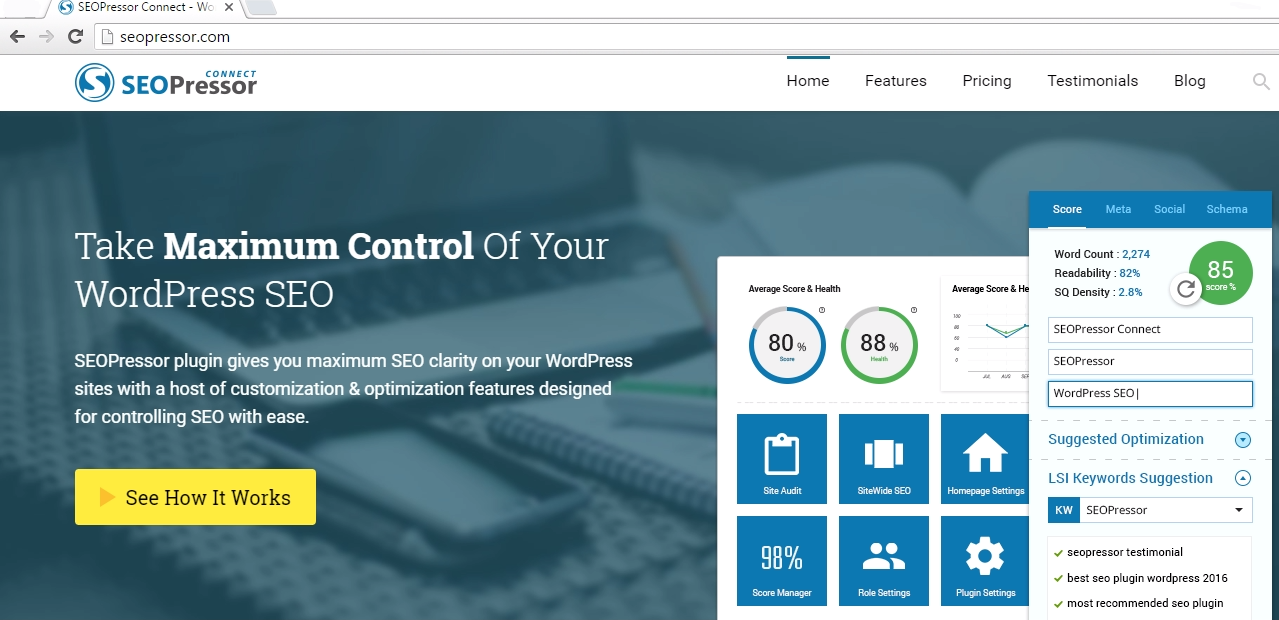
It should be something relatively easy to remember so that visitors won’t have trouble returning to your site because they forgot your domain name. You may even want to buy an aged domain so that you don’t have to age the domain.
If you already have a domain, make sure it won't expire anytime soon by renewing it for at least three to five years.
Step 2: Optimize Your On-Page Content
SEO is important for Google search engine rankings as well as your domain authority, so make sure you optimize all on-page code, including title tags, image alt tags, and the content itself.
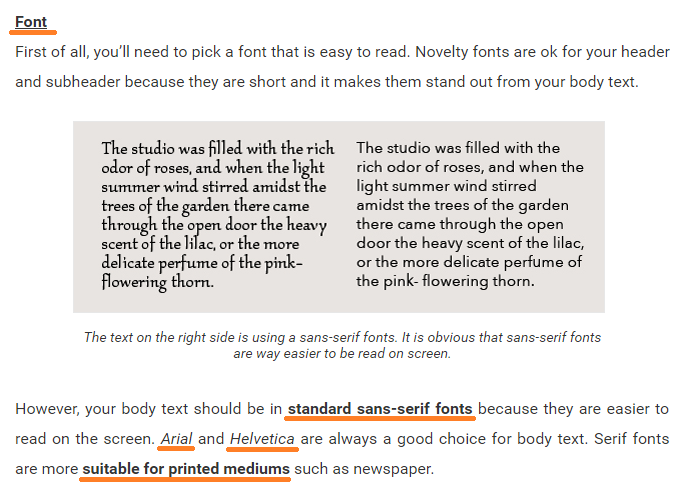
Additionally, include variations of your main keyword, make all of your permalinks short and relevant, and create a sidebar section for new posts.
A useful tool for easily finding variations of your main keyword is LSIGraph Keyword Research . It finds you semantically related keywords that you can use in your content to increase its keyword density without falling into the keyword stuffing trap.
LSIGraph’s unique feature is its Opportunity Score, which calculates which keywords give you the best chance of ranking with the least effort, so you can easily find low-hanging keywords to target in your content.
Build Domain Authority with Content Relevance
Another best SEO practice is to also improve the relevance of your content and keywords. This can be done by creating long and in-depth content that covers a very broad range of content.
This blog post you're reading, for example, while focusing on steps to increase domain authority, also briefly explains what domain authority is, and how it differs from page authority.
This is important in building your content because it tells Google about your context, that your blog post is talking about “Apple” as a fruit and not referring to the iPhone conglomerate.
To help build an effective content structure, you need two key ingredients: People also ask questions and related keywords. All of these can be found using BiQ’s Keyword Intelligence.
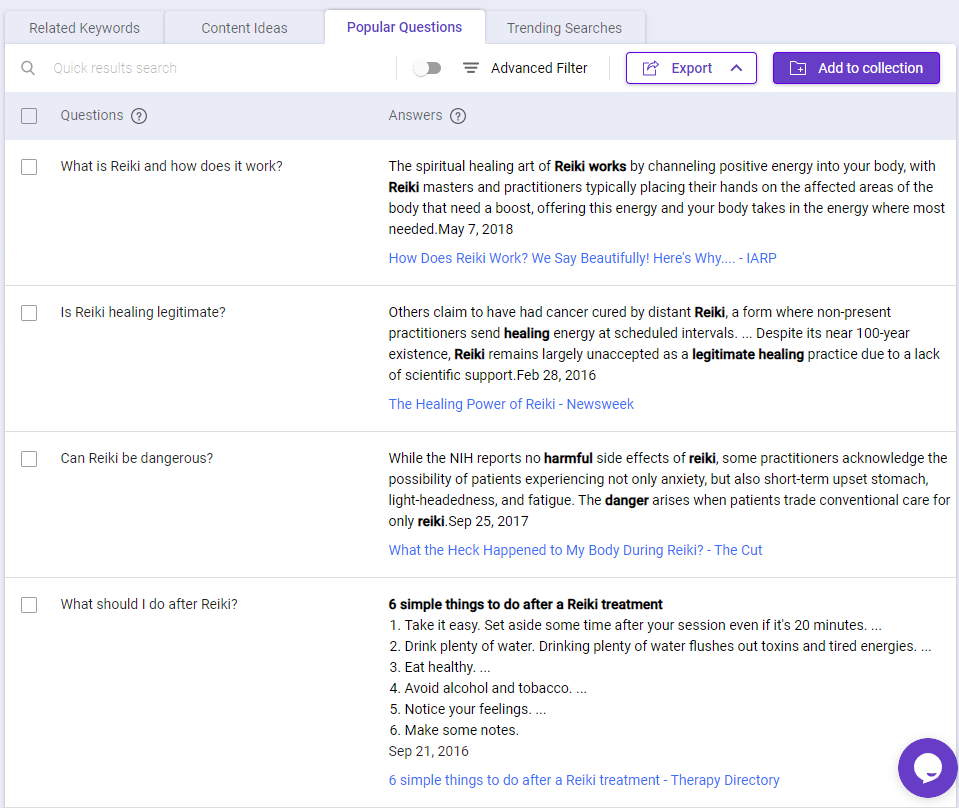
For example, you want to create a blog post about Reiki Healing, targeting people in the United States.
A quick search in BiQ’s Popular Questions tab will reveal the subheadings you should add to create comprehensive content and get a better chance of landing in the featured snippet.
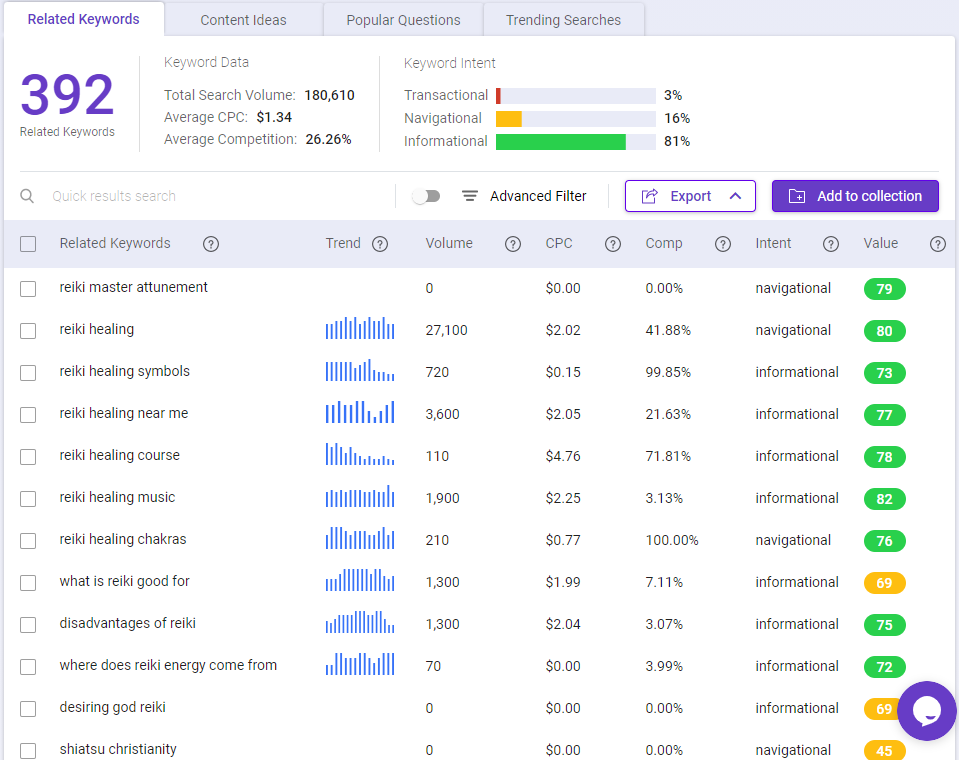
Switching to the Related Keywords tab, you will be able to see the total related keywords you can explore on that topic, and make a more informed decision on which to include based on keyword volume, search intent, and relevance.
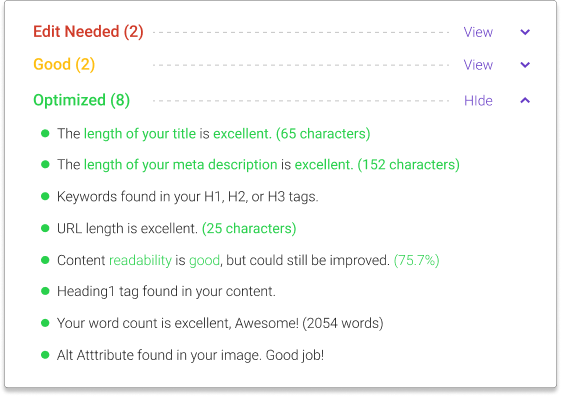
Once you publish your content, you can also use BiQ's Content Intelligence to find the best keyword composition and potential content gaps that will strengthen your website's relevance in your niche.
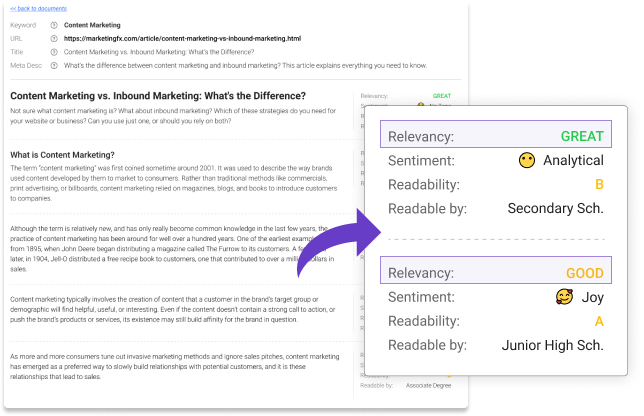
It’s very easy to use. All you have to do is enter your links and keywords into the module and Content Intelligence will do the rest for you. Then, simply optimize your content according to the suggestions provided and watch your traffic and rankings increase!
Step 3: Create Linkable Content
To get high-quality links from multiple domains, which MozRank and MozTrust use as an important factor, you need to create high-quality content that is published regularly.
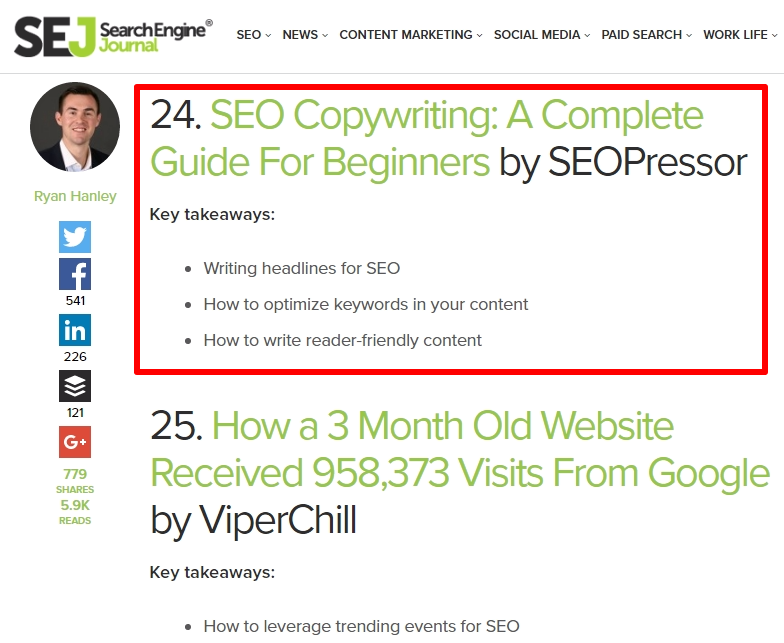
The better your content, the more likely other authoritative sites will link to it. This means that your content should be relevant to your brand and your audience, informative, creative, and well-written.
Step 4: Improve Your Internal Link Structure
Many websites are so concerned with getting external links that they neglect the importance of internal links.
Internal links help direct visitors to what they’re trying to find, improving their user experience. This means that if they’re digging deep into your back catalog of blog posts, they can still easily find their way to your homepage via one of your internal links.
At SEOPressor, we usually do internal linking by suggesting other related blog posts to our readers in case they want to read more about that particular topic.
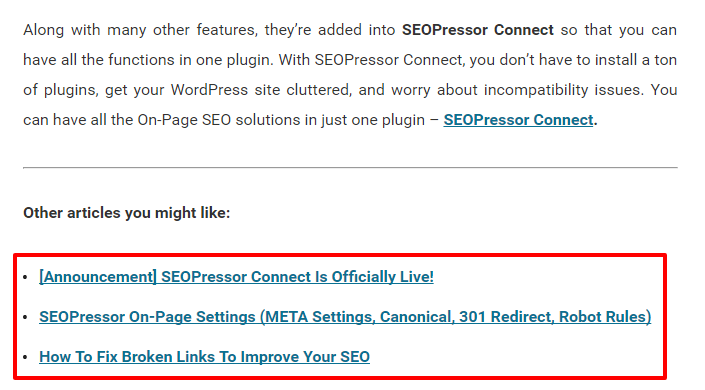
Internal links help prevent visitors from leaving in frustration and also help them stay engaged with your website at the same time. Additionally, internal links make it easier for search engines to index your entire site.
Step 5: Remove Bad And Toxic Links
Every once in a while, you should look at your link profile and look for bad or toxic backlinks. This will allow you to remove links from bad sources that could be hurting your domain authority instead of helping it.
You should also remove any links posted throughout your website that lead to bad or broken sites as this will also have a negative impact.
It can be a hassle to check every link on your website. To make things easier, you can use SEOPressor Link Manager which can help you manage all your links in one place. You no longer have to check your links one by one. Instead, you can check the status of your links – whether they are Broken or Live in the Link Manager itself.
Step 6: Make Sure Your Website is Mobile Friendly
A large number of online users access the web via mobile devices. If your website is not optimized for mobile use, you are way behind.
Not only will it hurt your mobile search engine rankings, but you'll lose a lot of visitors who will leave your site once they realize it doesn't display properly on their smartphone or tablet.
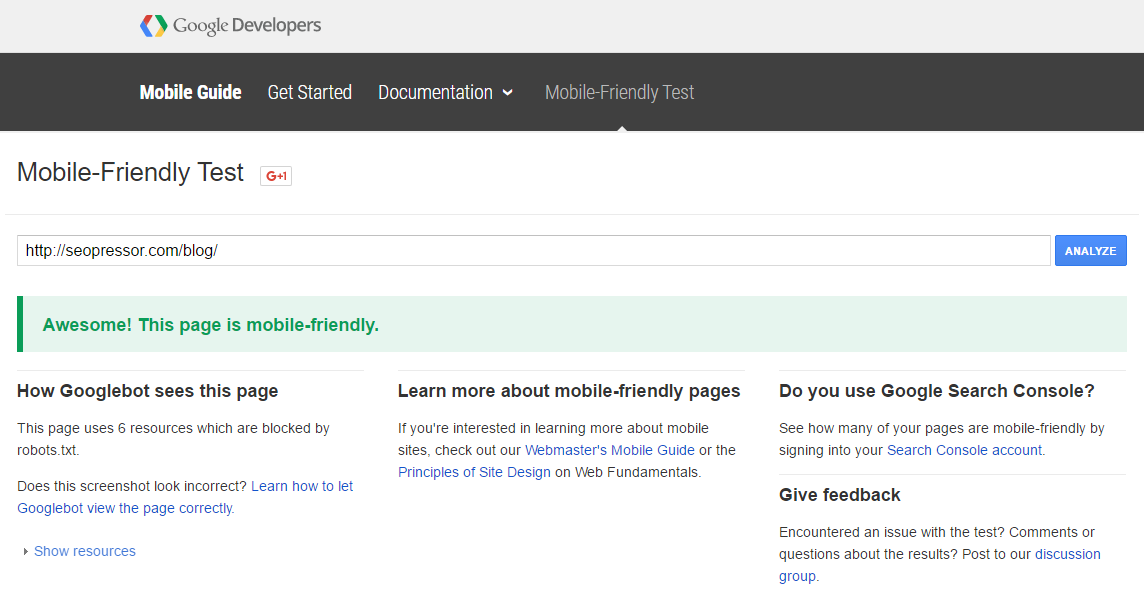
To check whether your website is mobile-friendly or not, you can visit this Mobile-Friendly Test by Google Developers page. It will analyze your web page and tell you how mobile-friendly your site is.
Step 7: Become an Authority in Your Niche
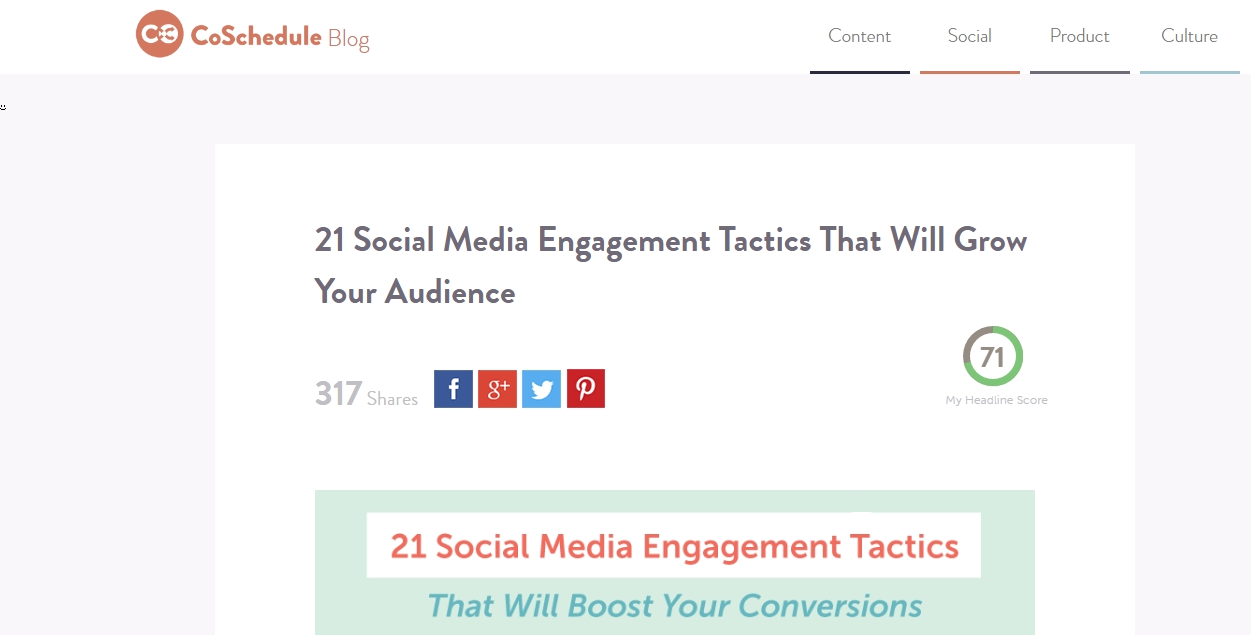
This can only be done by creating great content and engaging with your followers and consumers on social media in a meaningful way.
By increasing your reputation as an authority, you will strengthen your brand identity, which will not only help increase traffic but also increase the number of external links you earn from other high-quality sources.
Another way to increase your website authority is to guest blog on other websites that are relevant to your industry.
Step 8: Improve Your Web Page Loading Speed
Poor loading speeds can have a negative impact on your bounce rate. Most users have little patience for pages that take too long to load and will eventually abandon your website altogether if their patience runs out.
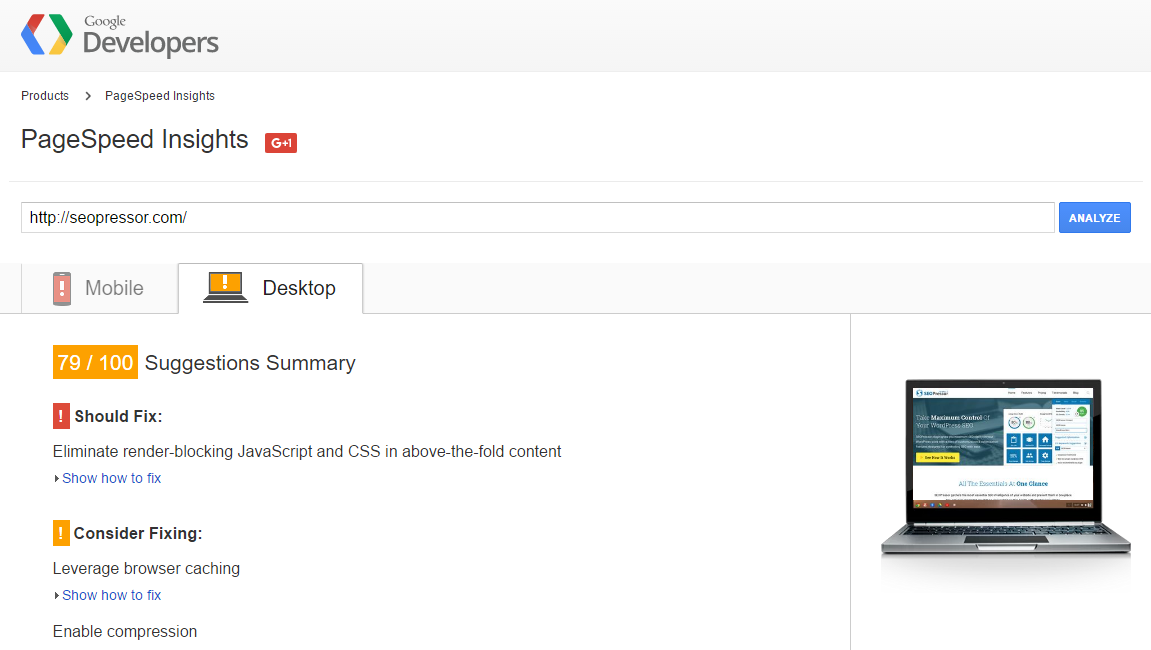
You can also check your website loading speed with the PageSpeed tool by Google Developers. Not only will it analyze your site speed, it will identify several ways for you to make your site faster and improve user experience.
Step 9: Promote Your Content Through Social Media
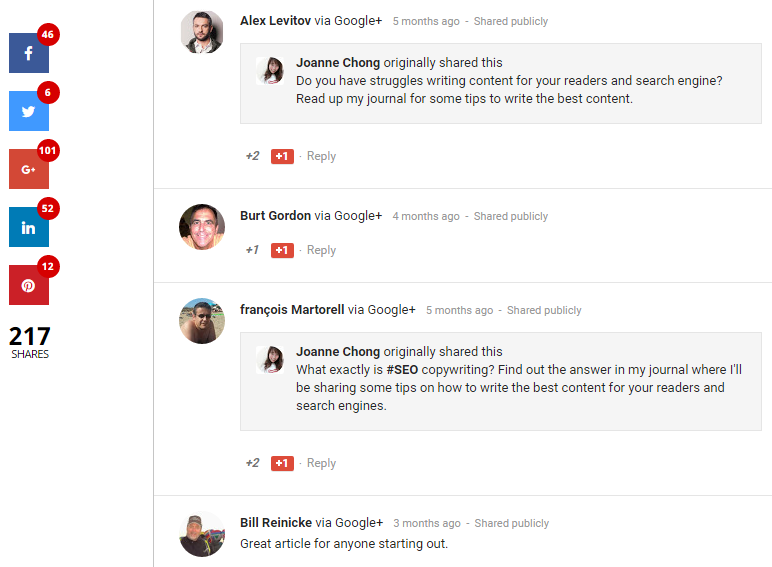
Since social signals are a big ranking factor, you need to promote your content on social media to get those signals. Otherwise, your content will just sit on your site by itself.
Promote your content across your various social media pages and be sure to encourage followers to like, share, or comment on it. You should also include social sharing buttons directly on your web pages.
- Choose a domain name that is relevant to your niche.
- Optimize on-page SEO including your title tags, image alt tags, and content. Use Keyword Intelligence and Content Intelligence to help you rank high and drive traffic to your site.
- Produce high-quality content that people will link to.
- Include internal links to improve user experience.
- Run audits to remove bad and broken links for a healthy website.
- Mobile friendly .
- Check your Domain Authority score in Open Site Explorer by entering your website URL.
- Become an expert in your niche.
- Make sure your website loads quickly to reduce bounce rates.
- Promote content through social media – Facebook, Twitter, LinkedIn, Snapchat.
- Don't forget to increase page authority too!
How to Create Web Visitor Interest
Design User Journeys, Not Just Web Design
We’ve shown that unique, high-quality content is key to driving visitors and engaging them to share with their friends. But what about the user experience?

Design for User Engagement, Not Just Web Pages
"Only 9% of users decide to stay on a site or mobile app that they are not satisfied with (e.g., information that is not as expected or navigation that is too slow/complicated)."
Instead of designing a web page destination for a user, try designing a user journey. A cohesive message and user-focused design will yield double results for both your audience and your business.

User Journey
1. Create a Moments Map
A moment map is your solution to identify user behavior, whether they really want your site or not.
This is the most fundamental thing to implement a pleasant user experience and can be a consideration for web design, so it will be very possible to change the web design for the best experience of your users. Design a site that focuses on the reader and flows them to navigation or engages them to share.
91% of smartphone users will return to their phones for ideas while they are on task. Creating a moment map, then this is an opportunity for you (the publisher) to facilitate them by creating a sitemap or moment-map.

Moments Map
Examine and map all stages of the user journey towards your brand / site, and find the moments when they want to seek inspiration, learn about something reported to you (analytic matrix), make a social statement, or anything in between. Then determine the best format to share your content. For example, do they have more time to read your content on average, or do they have limited time? so it's no wonder that sometimes your content is compared by them to your competitors. Therefore, understanding the user's motives before you start conceptualizing your web design, this will greatly help you in creating a pleasant user experience. Being able to serve the various characters and interests of your visitors can make them feel at home on your site and willing to spend time on your site.
2. Make it easy for users to achieve their goals
Examples: Increase reach, Exclusive media, Preferred content formats, Newsletters that encourage sign-ups or Conducting surveys on your users' satisfaction or interests via forms.
Strategies like the examples above are very useful for collecting user insight data, so you will have an easier time understanding your user demographics, making it easier for you to create targeted content. Research shows that 67% of users will switch to another place if they waste a lot of time.

Content Targeting or User Locking
Example: Boost your page views by providing relevant recommended content.
Matched content (Matched Content) is a free feature in Google Adsense, this feature is able to sort the contents of your site so that it is suitable for readers and recommends it. Indirectly you also benefit because your content is promoted. The behavior of each user is also involved in Match content.

Match Content by Google
3. Clearly define, interactive and invite user action
This includes a “Sign Up” button and a short guide that can direct readers to a specific page. This is a best practice in retaining your visitors.
"Get into the minds and hearts of your target visitors."
How to Make Visitors Familiar With Your Brand
Separate your content from your competitors, meaning make your content have its own characteristics. This needs to be done to make an impression on the minds of visitors. One way is to build a Brand that is consistent with the advantages you offer in your Brand, or in other words, maintain the consistency of your Brand's reflection. For example, you are a specialist / expert in the field of tourism, then you build your Brand with the advantages you have, so that the world of tourism is attached to your Brand, and people always remember your Brand because of its tourism, so that every time they want to go on vacation or look for references about tourism, your Brand automatically becomes their reference.
"60% of respondents from a survey conducted via mailing list expect a consistent brand experience. Whether they can communicate online, in-store / office / direct location, or via telephone."

Help Audiences Become Familiar With Your Brand
1. Determine your voice
In creating a Brand, you need to determine a distinctive language style, do you want to convey information in a relaxed, easy and simple language style, or a mixture, or formal complete with references? Each style has its own advantages in capturing the audience.
2. Consistent
Once you’ve found the right tone for your brand, the next step is to make sure you’re consistent with it, and apply it to all of your content, so that people can easily recognize and relate to your brand, and know what to expect when they return to your site, whether it’s via your app or your social media properties.

Brand Consistency is familiarly called "NICHE"
3. Relate to User interests
It is not enough to determine the language style, but you also need to ensure that the topics you will present are important and relevant to readers, so that readers think that your site is worth referring to.
Use Google Analytics
Each user plays an important role in your brand, they have unique attitudes, interests, and needs. This difference is important when he decides to continue reading the content whether male or female, and also to know their shopping habits, so you can map the best-selling products and need to be stocked more in the future, not only that, with google analytics you can also find out their satisfaction, by monitoring what content they share most often.
Analyzing your site can help you determine what topics are important for your next audience, and which ones are unnecessary.

Learn to Analyze Your Site using Google Analytics
Set Up Your Analytic Dashboard Now to Track Your Most Important Metrics. The dashboard is the first thing you see when you log into your Analytic account, and Analytic can help you make decisions faster.
Focus on the Long-term Revenue Framework. It sounds very simple, but a strong framework can help you understand the 4 things that are needed for your site to grow. With the framework, you can consider your site optimization efforts, in this case there are 4 levels of Charts that need to be followed up;

Google Adsense Long-term Revenue Framework
Google consumer surveys allow you to create surveys on your own site, collecting data and statistics about what users think about your site/brand, what might be important to them, and even determining the design and colors that are suitable for your site.

Survey Result Example - Analytic Matrix
"Have a clear and solid plan for your various user segments, provide valuable and enjoyable insights to them, that way you will feel their involvement in your Brand."